
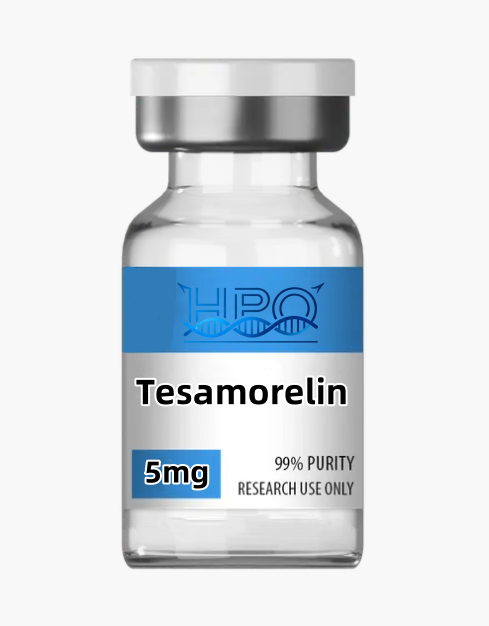
Tesamorelin
Price range: $80.00 through $280.00
Tesamorelin is a synthetic GHRH analog examined in endocrine and body-composition research. Review primary evidence, study limitations and batch-documentation requirements. This research material is not represented as an approved medicine and is not for human or veterinary administration.
DISCLAIMER:
Tesamorelin: Comprehensive Research Guide
Tesamorelin is a synthetic growth hormone-releasing hormone analog studied in endocrine and body-composition research. This page provides an evidence-based overview for researchers who need to distinguish molecular identity, published clinical findings, and the documentation of an individual laboratory material. It is not a prescribing guide and does not represent this catalog item as an approved medicine.
For laboratory research only. This material is not intended for human or veterinary administration, diagnosis, treatment, bodybuilding, or self-experimentation. Published results involving a regulated pharmaceutical formulation do not establish equivalence, clinical suitability, or safety for a research product. The presence of the same compound name on two labels is not sufficient evidence that the products are interchangeable.
Identity and Molecular Features
Tesamorelin is based on the 44-residue sequence of human growth hormone-releasing factor, with an N-terminal hexenoyl modification. The approved drug documentation describes an acetate salt and a free-base-equivalent molecular weight of approximately 5135.9 Da. These are reference identity details; the exact form and analytical characteristics of a supplied research batch require separate verification.
When reviewing a certificate of analysis, distinguish the peptide component from the complete supplied material. Counterion content, water, and additional ingredients can affect mass-based calculations. A nominal vial amount should not automatically be treated as analytically verified peptide content. Keep the chemical form, reporting convention, and calculation basis visible in laboratory records so that another researcher can reconstruct the preparation.
Mechanism: The GHRH Research Context
Tesamorelin stimulates GHRH receptors and endogenous growth hormone release, with downstream changes in IGF-1. It is not growth hormone itself. Receptor stimulation and downstream endocrine measurements are different endpoints, and neither alone establishes a beneficial response across all tissues or populations. The official EGRIFTA WR prescribing information supplies the pharmaceutical reference context.
For experimental planning, separate target engagement from the outcome ultimately being investigated. A receptor assay, a hormone measurement, and a body-composition endpoint address different levels of biology. A result from one level should not be presented as proof of another without supporting measurements. Model choice, baseline conditions, and timing can all affect what an experiment can reasonably conclude.
Clinical Evidence and Its Boundaries
A 2007 randomized study enrolled 412 people with HIV and abdominal fat accumulation. Over 26 weeks, investigators compared tesamorelin with placebo and used computed tomography to assess visceral adipose tissue. The reported visceral-fat change was a decrease of 15.2% in the treatment group versus an increase of 5.0% with placebo. These findings concern the studied population, formulation, and protocol; they are not a prediction for a purchaser of this material. See the original randomized trial.
A subsequent randomized study with a safety extension assessed continuation and withdrawal of treatment. It reported that initial improvements in visceral adipose tissue were lost after participants switched to placebo. This matters when interpreting durability: an outcome measured during exposure is not necessarily a permanent change. Review the trial with continuation and withdrawal phases for its study design, endpoints, and limitations.
A separate, smaller randomized trial investigated visceral and liver fat in people with HIV and abdominal fat accumulation. The study reported reductions in these imaging endpoints but described the need for further research into clinical importance and longer-term consequences. Imaging changes should not be restated as proof of improved survival or prevention of cardiovascular disease. The visceral and liver fat trial is the relevant primary source.
Another trial involved abdominally obese participants selected for reduced growth hormone secretion. Its inclusion criteria are important: the results cannot be generalized to every person seeking weight loss. Read the trial in participants with reduced GH secretion as evidence about a defined research population, not as authorization for unsupervised use or an endorsement of this catalog product.
Approved Medicine Versus Research Material
EGRIFTA WR has a specific indication for excess abdominal fat in adults with HIV-associated lipodystrophy; it is not indicated for weight-loss management. Its labeling includes warnings about elevated IGF-1, glucose intolerance, and other risks, and states that long-term cardiovascular safety is unestablished. Those statements apply to the labeled medicine and do not approve this listing.
This page does not provide injection instructions, a starting dose, a treatment cycle, or a monitoring schedule for people. Different pharmaceutical presentations can have formulation-specific instructions, which should not be copied onto an unrelated laboratory product. Medical decisions belong with an appropriately qualified clinician using the current documentation for the actual prescribed medicine.
For researchers, the useful distinction is between literature context and product qualification. Literature explains why a molecule may be scientifically interesting. Product qualification establishes whether the received material is suitable for a particular experiment. Neither replaces the other, and a recognized compound name does not remove the need to check the specific batch.
Product Specifications and Verification Checklist
| Property | Reference information or required check |
|---|---|
| Product name | Tesamorelin |
| Compound class | Synthetic GHRH/GRF analog peptide |
| Structural reference | 44-residue peptide with N-terminal modification |
| Supplied form | Confirm salt identity and presentation using the batch documentation |
| Quantity | Check the selected product option and actual label |
| Identity | Review available identity testing and its acceptance criteria |
| Purity | Use batch-specific analytical data; no unsupported purity guarantee is made here |
| Peptide content | Distinguish net peptide content from total powder mass and chromatographic purity |
| Additional ingredients | Verify where relevant to the assay; do not assume an excipient-free preparation |
| Storage and stability | Follow documentation for the supplied form and validated preparation |
| Intended use | Laboratory research only; not a substitute for an approved medicine |
A useful analytical document links the product identity to a batch number and states the test performed. Review identity and purity as separate questions. A chromatographic result alone does not establish the complete impurity profile, sterility, endotoxin content, or suitability for administration. Request additional evidence when an experimental requirement depends on one of those characteristics.
Laboratory Handling and Preparation
Select a preparation method for the actual material and the intended assay. Do not copy a solvent, concentration, or storage interval from a different product simply because its name appears similar. A suitable method should specify the preparation basis, relevant compatibility checks, and criteria for deciding whether the material remains acceptable during the experiment.
Record the batch number, solvent or buffer, nominal concentration, preparation date, and storage history. Note whether the concentration is calculated from weighed material or confirmed analytically. If the experiment uses multiple preparations, maintain separate records for each one. This helps distinguish variation caused by preparation from variation arising in the biological model.
Dry-material storage instructions and solution stability are separate issues. A shelf-life statement should match the chemical form, container, solvent, temperature, and analytical endpoint actually evaluated. Do not assign a universal lifetime to a prepared stock. Follow the current safety data sheet and institutional procedures for containment, personal protection, waste disposal, and any required approvals.
Planning Interpretable Endocrine Research
Define the primary question before selecting an endpoint. If the aim is receptor activity, establish suitable controls for that assay. If the aim is a downstream response, explain why the model and measurements can support that inference. Where appropriate, include an independent indicator of target engagement instead of relying on a single broad biological signal.
Separate independent biological samples from repeated technical measurements. Document the normalization method and the timing of sample collection, since these choices shape interpretation. Set out the analysis plan and exclusion criteria before comparing groups. A clear record of null or inconsistent findings is as important as reporting a positive result.
When discussing body-composition literature, keep visceral adipose tissue, subcutaneous fat, body weight, and lean mass distinct. They are not interchangeable outcomes. Also distinguish change from baseline from a between-group treatment effect. Report the population, comparison group, follow-up duration, and uncertainty alongside any numerical result.
Related Research Catalog Pages
These links are provided for navigation and comparison, not as a combination protocol. Each material has its own identity and evidence base. A shared research theme does not establish compatibility, equal potency, or interchangeable effects.
- Sermorelin acetate: consult its separate identity and research description.
- Ipamorelin: review independently when comparing endocrine research materials.
- PEG-MGF: a distinct catalog item, not a substitute for tesamorelin.
- MOTS-c: a separate entry for broader metabolic research literature review.
- 5-Amino-1MQ: a small molecule whose evidence should not be transferred to a GHRH analog.
- Mazdutide: compare its own molecular and experimental context.
- Humanin: review its separate documentation and intended use.
- SS-31: another independently characterized research entry.
Frequently Asked Questions
1. Is tesamorelin the same as growth hormone?
No. It is a growth hormone-releasing hormone analog, not growth hormone itself. Keep this distinction explicit when choosing assays or comparing literature, because testing a releasing-factor pathway is not the same as directly supplying the downstream hormone.
2. Is this catalog product an approved prescription medicine?
This listing does not establish that status. References to a regulated medicine explain published evidence and do not certify this product as equivalent. The supplied material is presented here for laboratory research, not clinical use.
3. Do clinical trial results guarantee fat reduction?
No. Trial outcomes describe particular groups studied under defined conditions. They do not guarantee an individual result and cannot establish the performance of an unrelated commercial research batch. Review the original study rather than applying a percentage without its context.
4. What human dose or cycle is recommended?
None is provided for this material. This page is not a dosing or injection guide. Laboratory conditions must be selected for a defined experiment under appropriate oversight and must not be repurposed as self-administration instructions.
5. Can it be combined with other peptides?
No general combination recommendation is made. A proposed research combination requires its own rationale, compatibility assessment, controls, and authorization where applicable. Catalog cross-links do not establish synergy, safety, or an appropriate exposure regimen.
6. How should a laboratory prepare and store it?
Follow instructions that match the supplied chemical form and the laboratory’s validated method. Record preparation details and confirm any stability claim needed for the experiment. Instructions for a pharmaceutical formulation should not be assumed to apply to this research item.
7. What documentation matters most before use?
Confirm identity, batch traceability, analytical specifications, quantity basis, and relevant handling information. The responsible institution should also verify procurement and import requirements. A product name or research-use label is not proof of permission for clinical use.
Research Summary
Tesamorelin literature is most useful when the molecular mechanism, study population, measured outcome, and product identity remain separate. Use primary studies for evidence and batch-specific documents for material qualification. This guide does not replace clinical care, institutional oversight, or the analytical work needed to establish fitness for a particular laboratory purpose.
| Specification | 5mg*10vials, 10mg*10vials, 20mg*10vials |
|---|
Only logged in customers who have purchased this product may leave a review.
Related products
Reviews
There are no reviews yet.